TalentWorks / Hands-On Data
Empowering the deaf through data.
MHCI's inclusive digital skills initiative — equipping deaf individuals and other underrepresented groups with high-demand skills in data analytics, visualization, and digital problem-solving, taught entirely in Nigerian Sign Language.
About Hands-On Data
Africa's first deaf-led data talent pipeline.
Africa holds a wealth of untapped talent, including persons with disabilities. For the deaf community, limited access to technology, digital education, and workforce inclusion has long restricted career pathways — even as the demand for data-literate professionals climbs.
Hands-On Data bridges that gap. We equip deaf learners and other underrepresented groups with the analytics, visualization, and digital problem-solving skills employers need, delivered in Nigerian Sign Language by deaf facilitators.
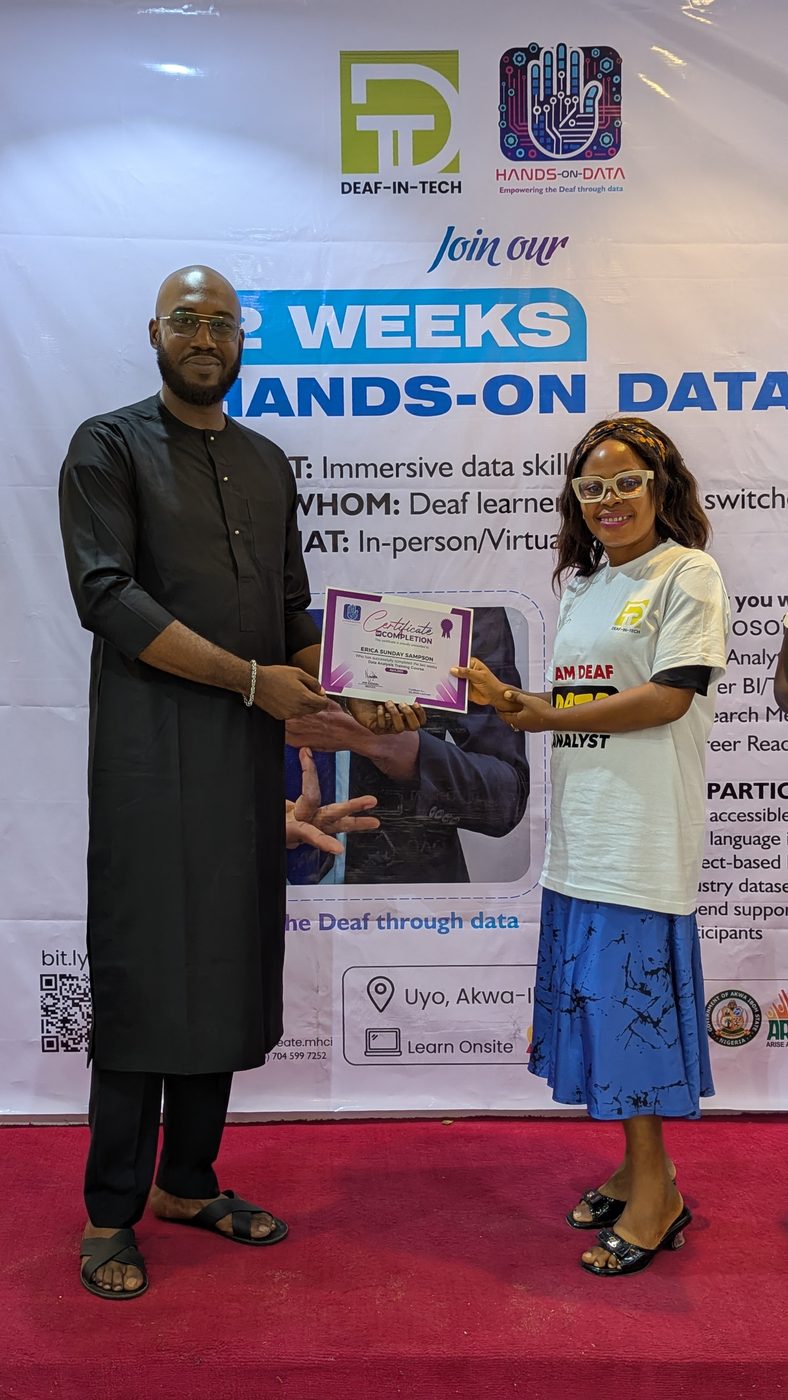
Graduates don't just learn — they become role models, community leaders, and working professionals, placed directly into client projects through MOSAIC Labs.
The Vision
A continental model for inclusive digital skills — positioning Africa as a leader in inclusive digital talent, and proving that independence, representation, and workforce participation for deaf talent aren't aspirations. They're outcomes.
Cohort 1 — April 2025
Results from day one.
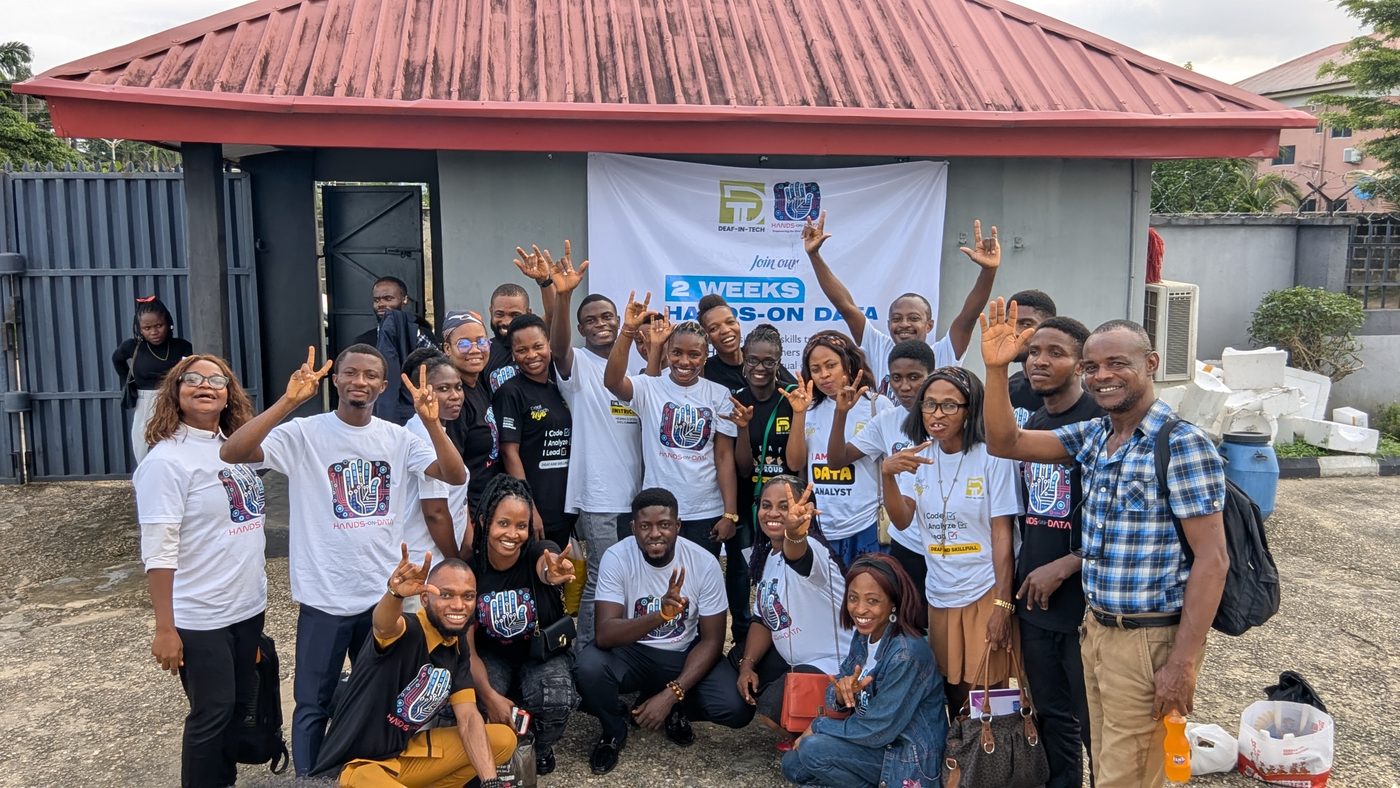
Participants enrolled
Recruited through community and partner networks across Akwa Ibom and beyond.
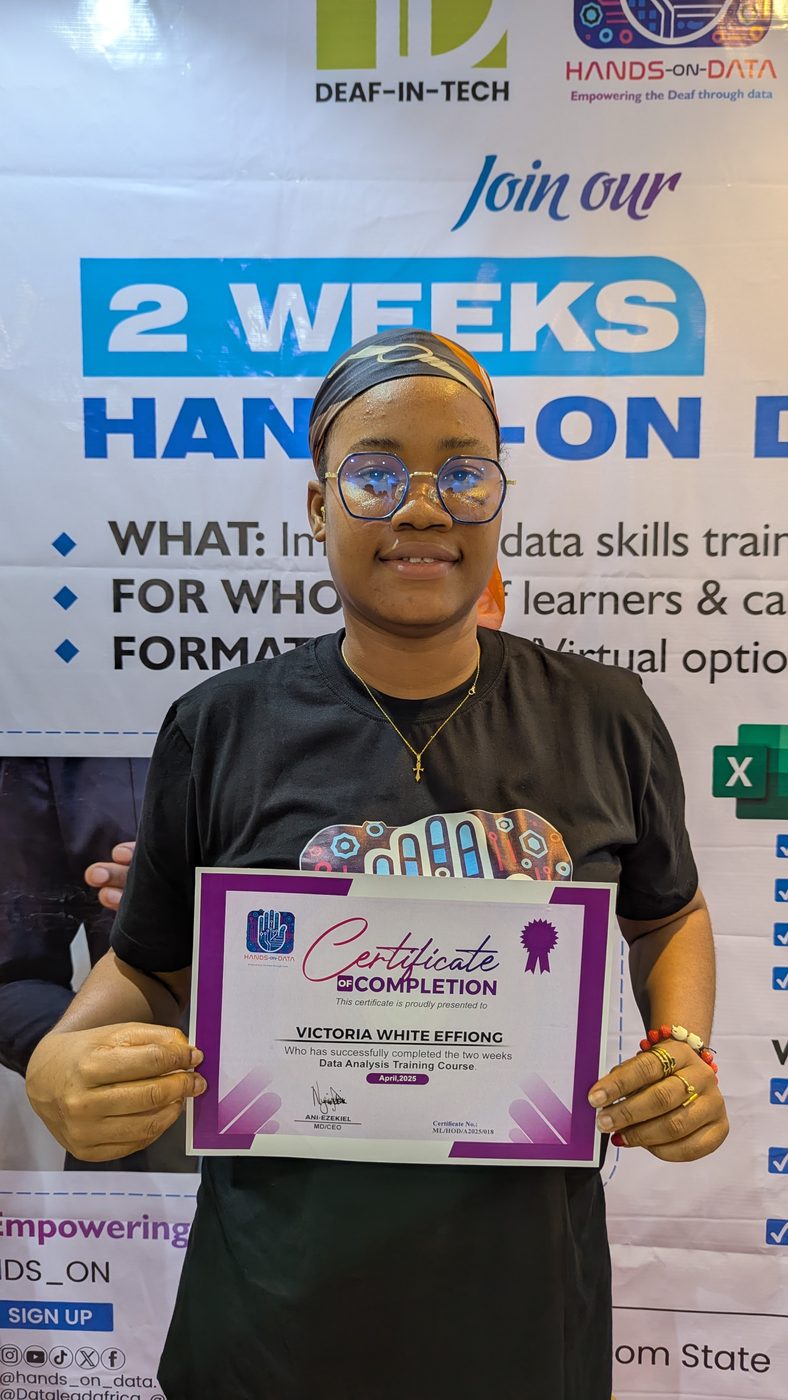
Graduates
Digitally literate, portfolio-ready, and positioned as role models in their communities.
Requested continuation
Every graduate asked to stay on — a clear signal of demand, engagement, and trust.
First of its kind in Nigeria
A deaf-led, Nigerian Sign Language data cohort with a direct pipeline into paid client work.
What we teach
Hands-on skills, real-world impact.
Data Analytics
Clean, model, and analyse real datasets using industry-standard tools — Excel, Google Sheets, Power BI. The foundational layer every data professional needs.
Data Visualization
Turn raw numbers into clear, decision-ready stories. Dashboards, charts, and visual reporting designed for how people actually read data.
Digital Problem-Solving
Apply digital tools to real business challenges — from process automation to data-driven decision-making — through hands-on workshops and live projects.
Workplace Readiness
Portfolio-building, collaborative project work, and client communication skills that translate directly into MOSAIC Labs placements.
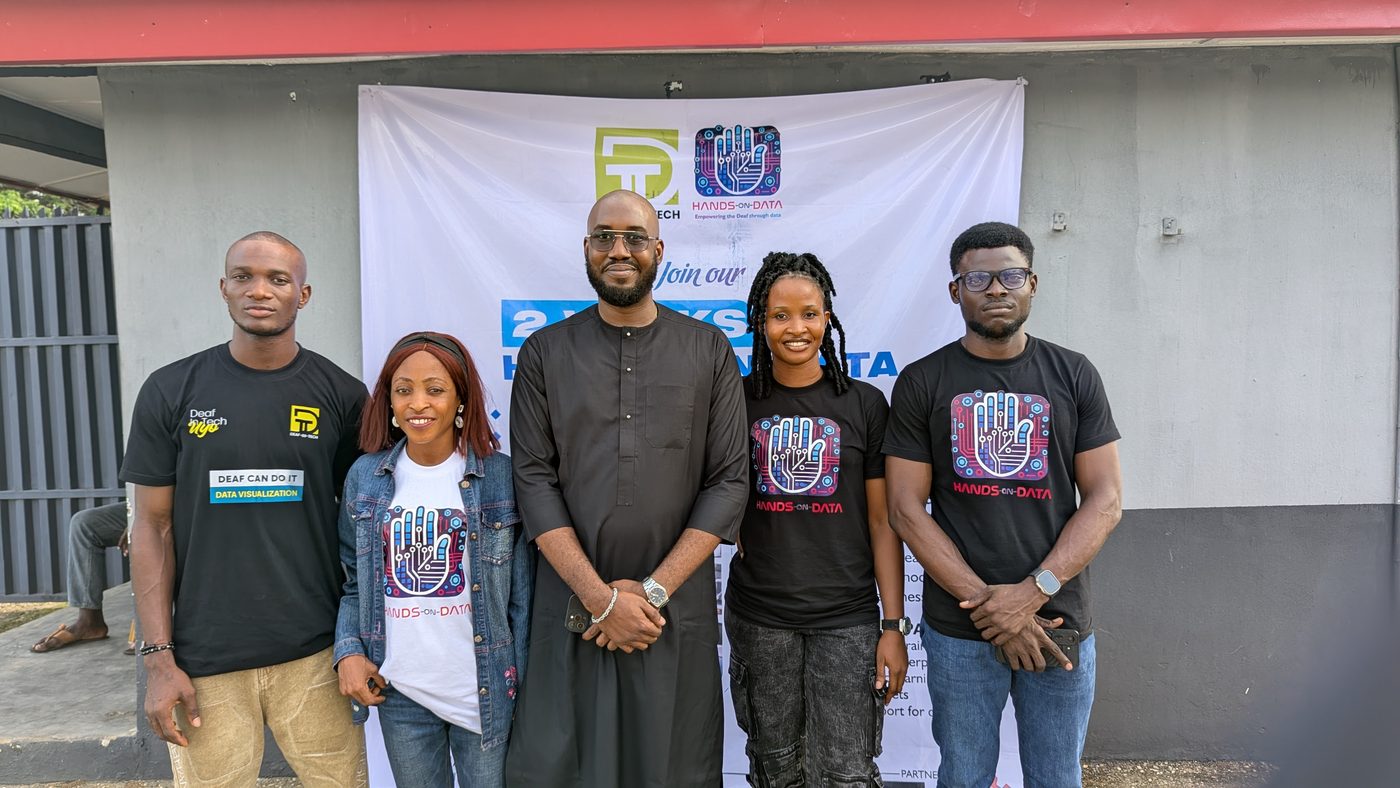
Inside the cohort
Learning, signed and shared.
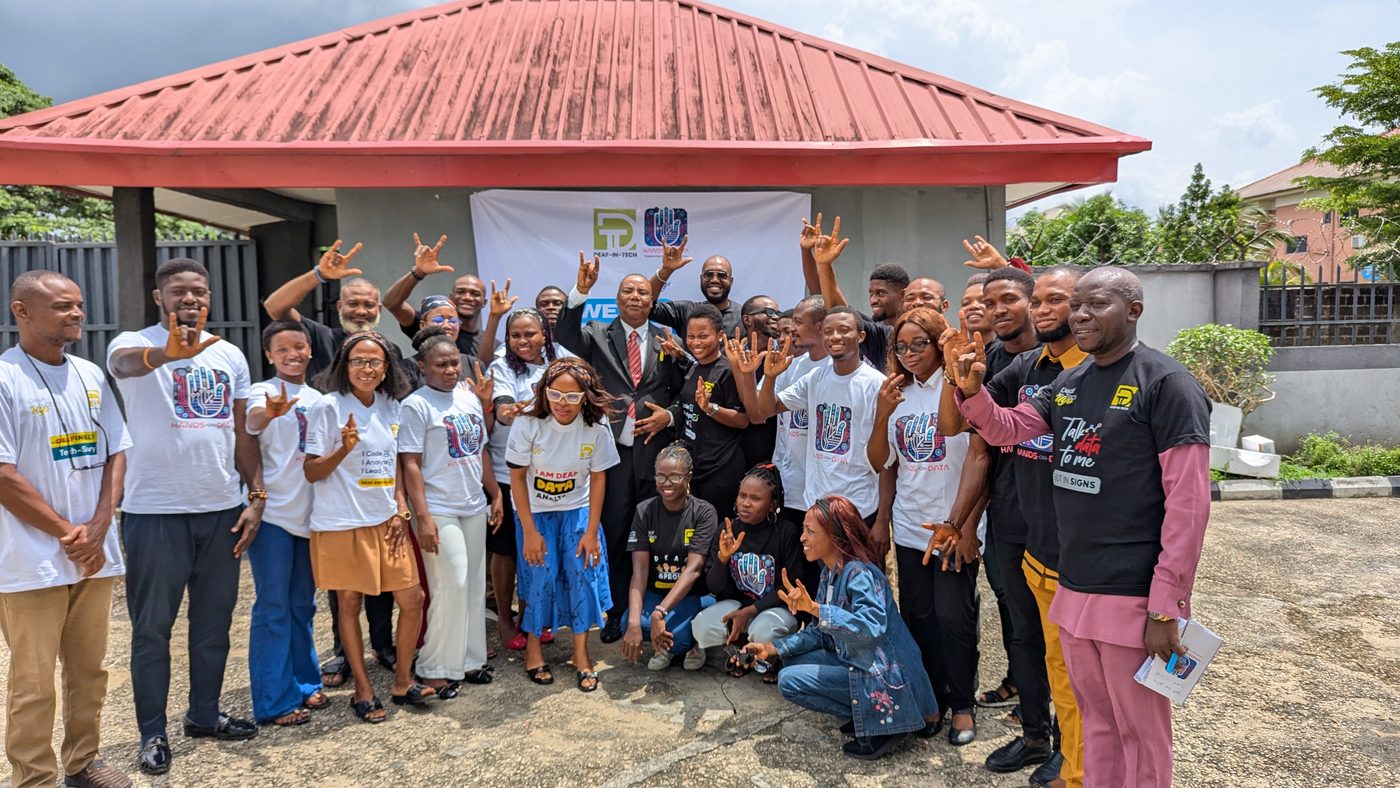
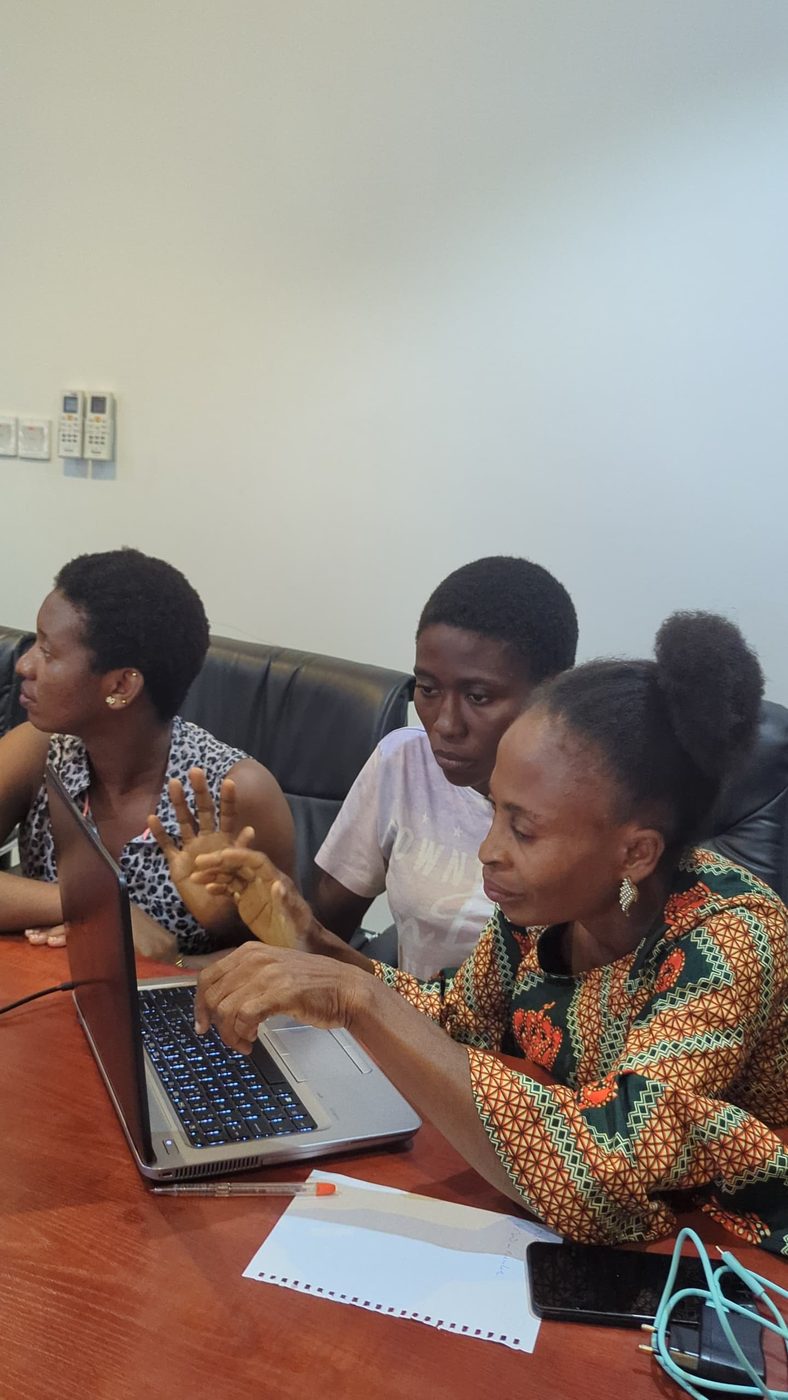
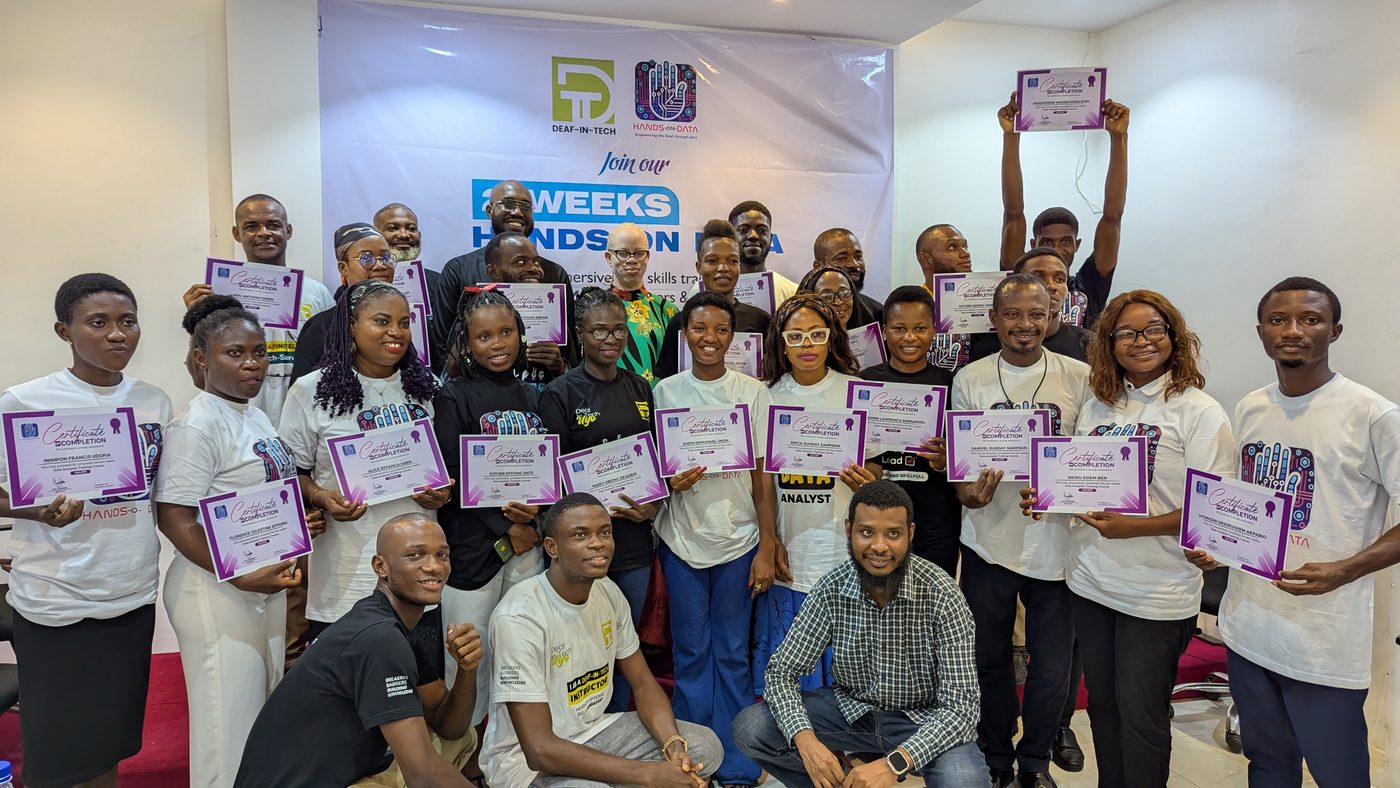
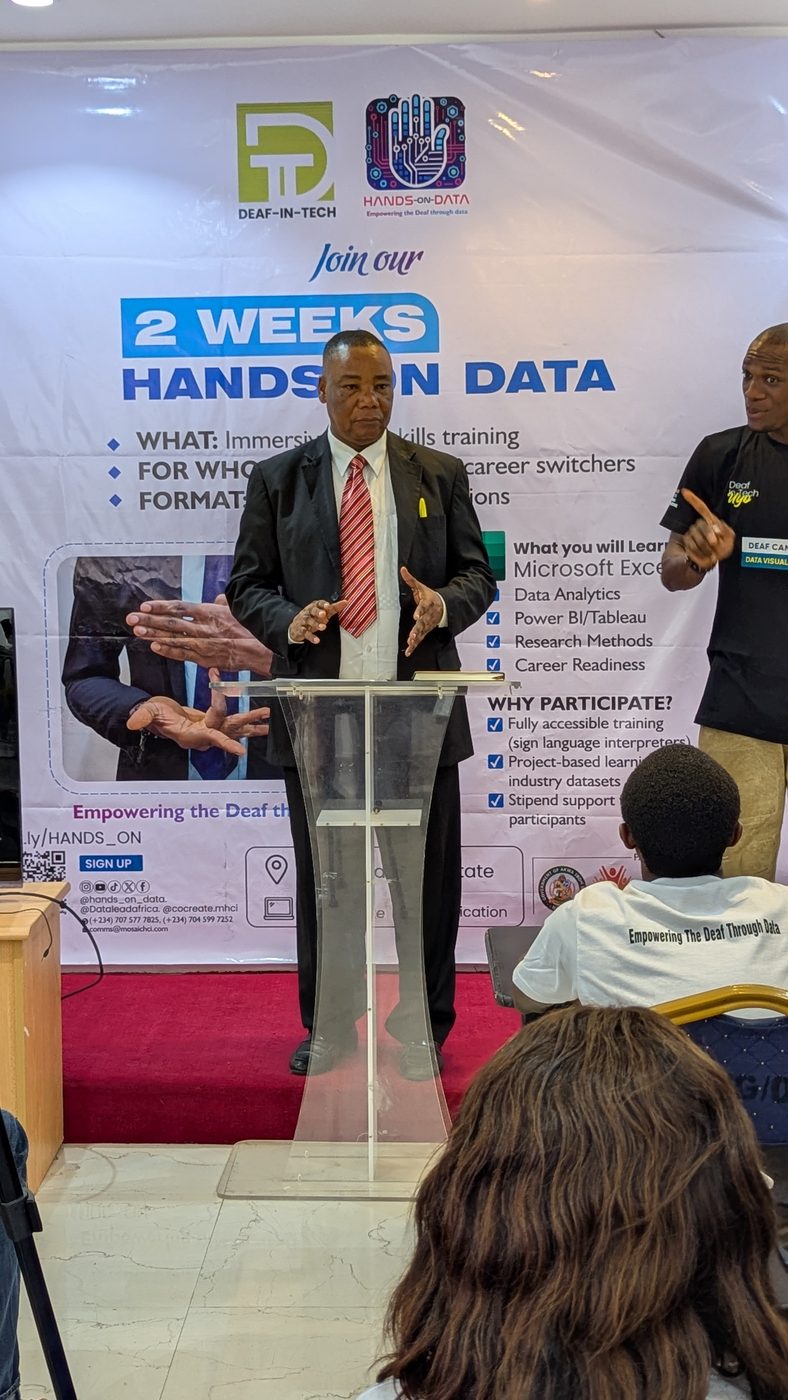
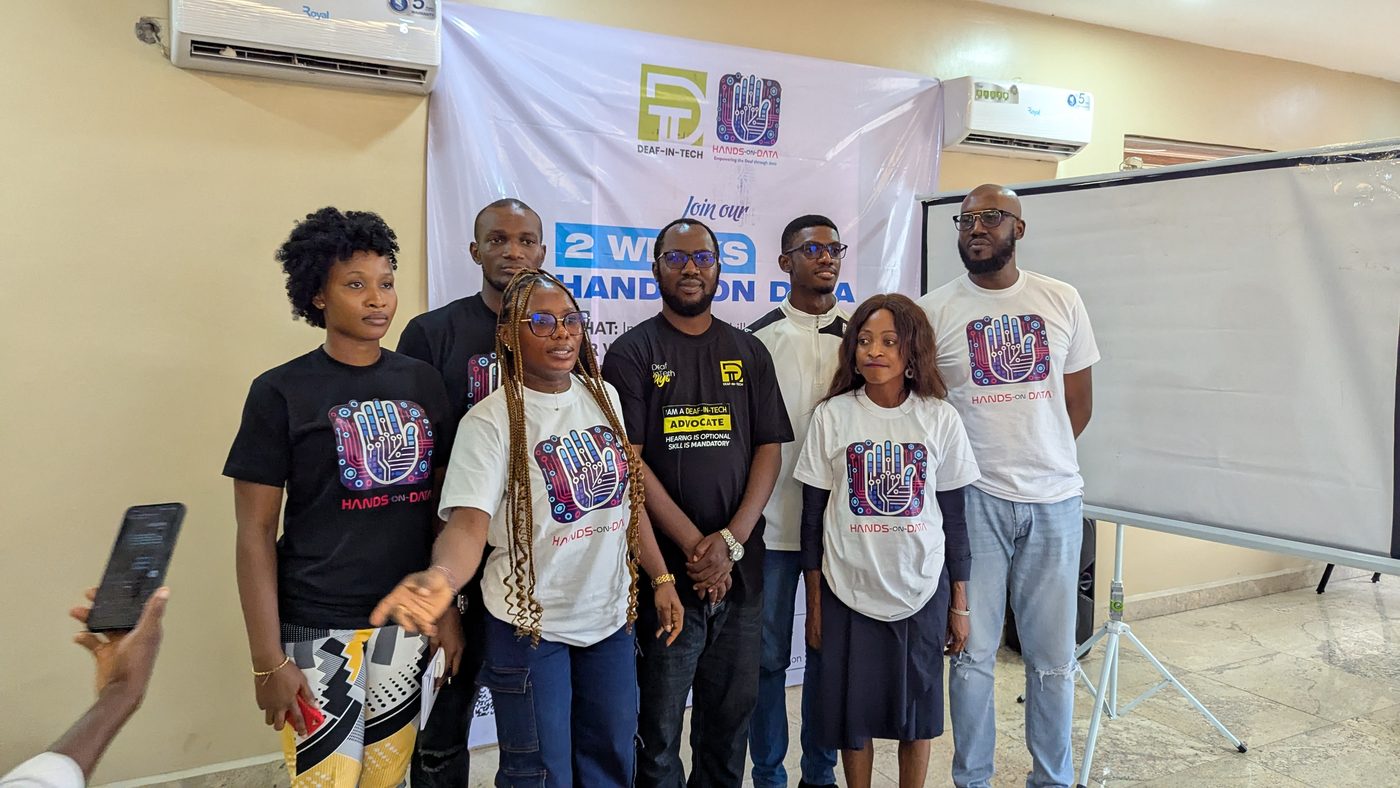
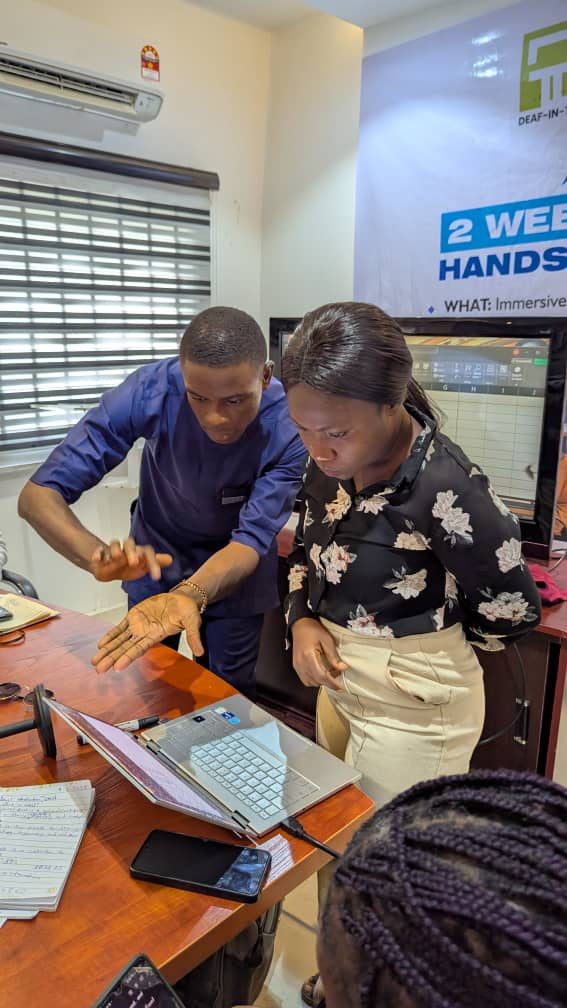
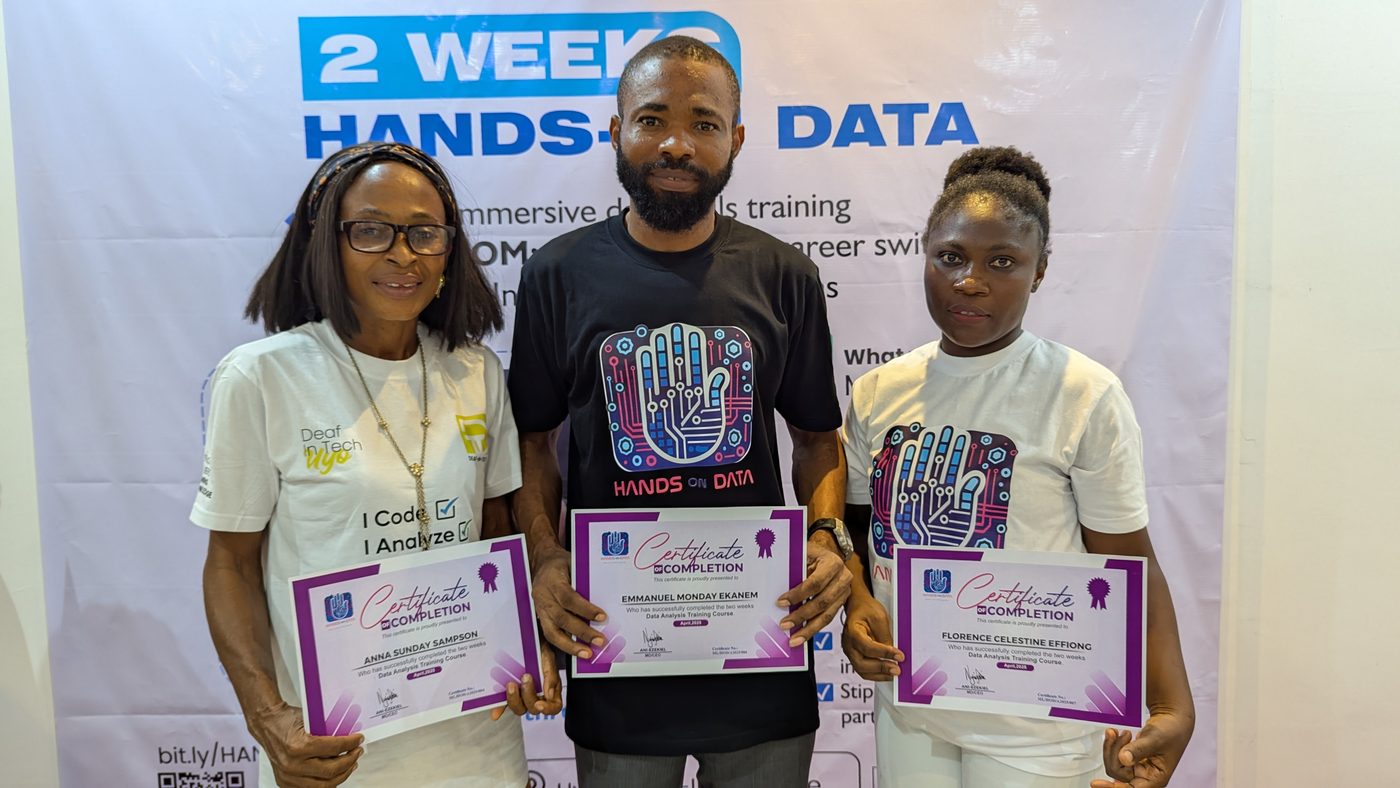
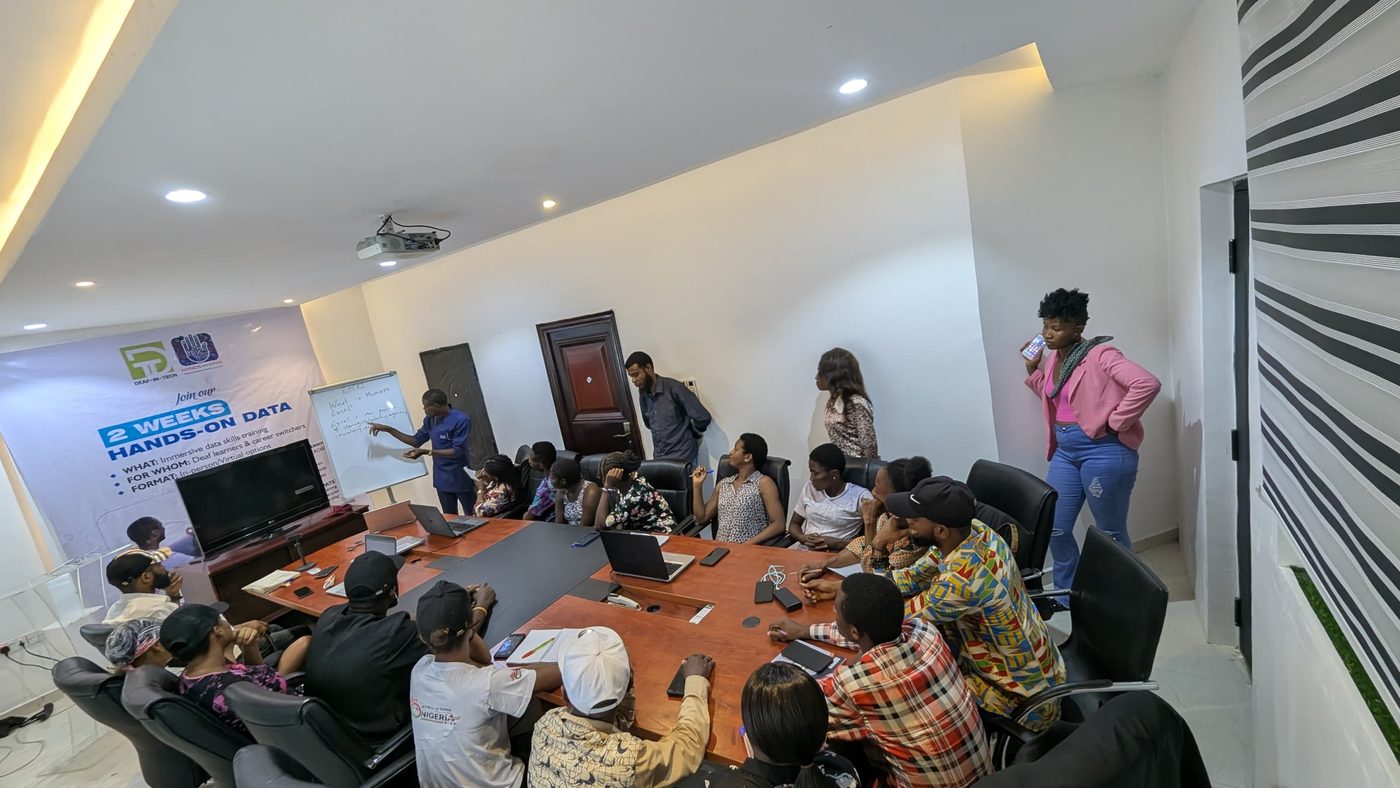
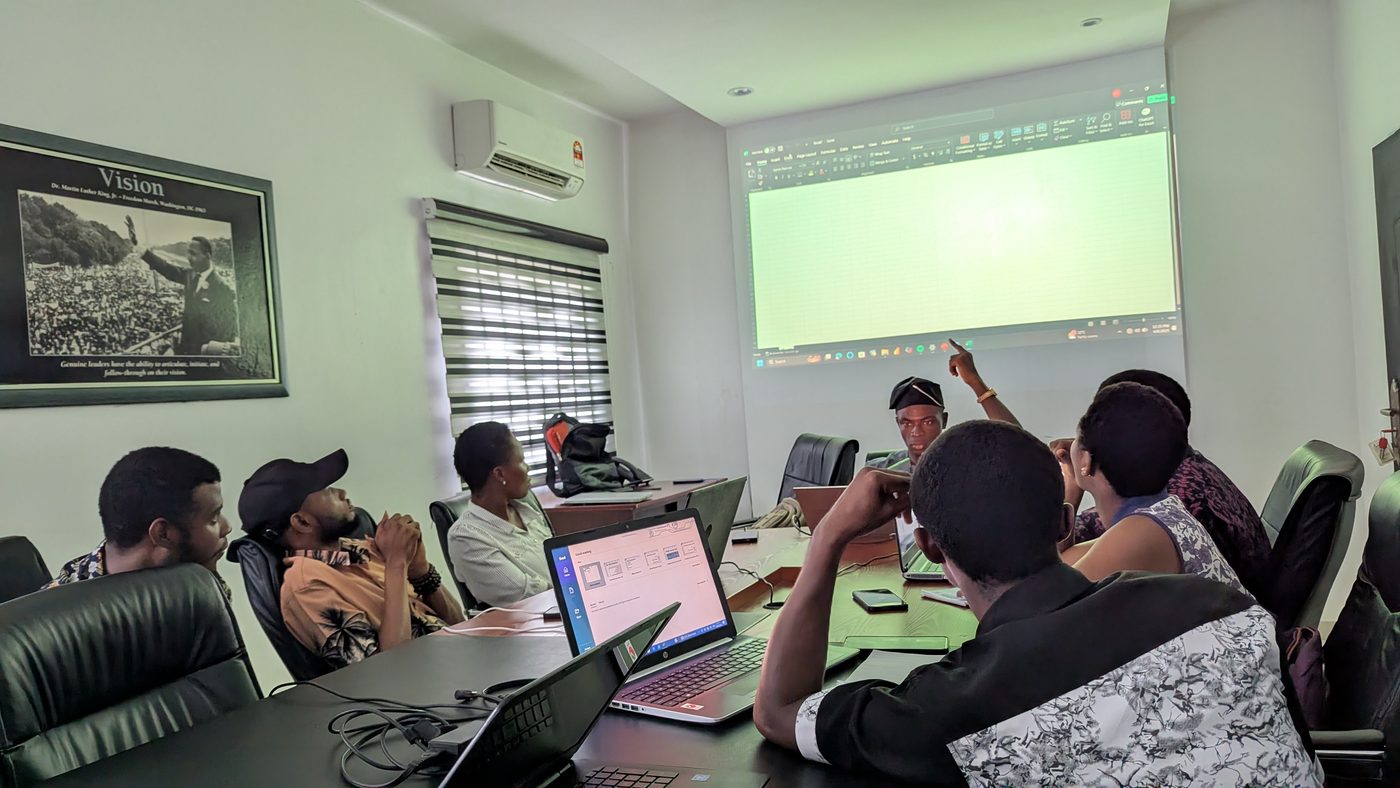
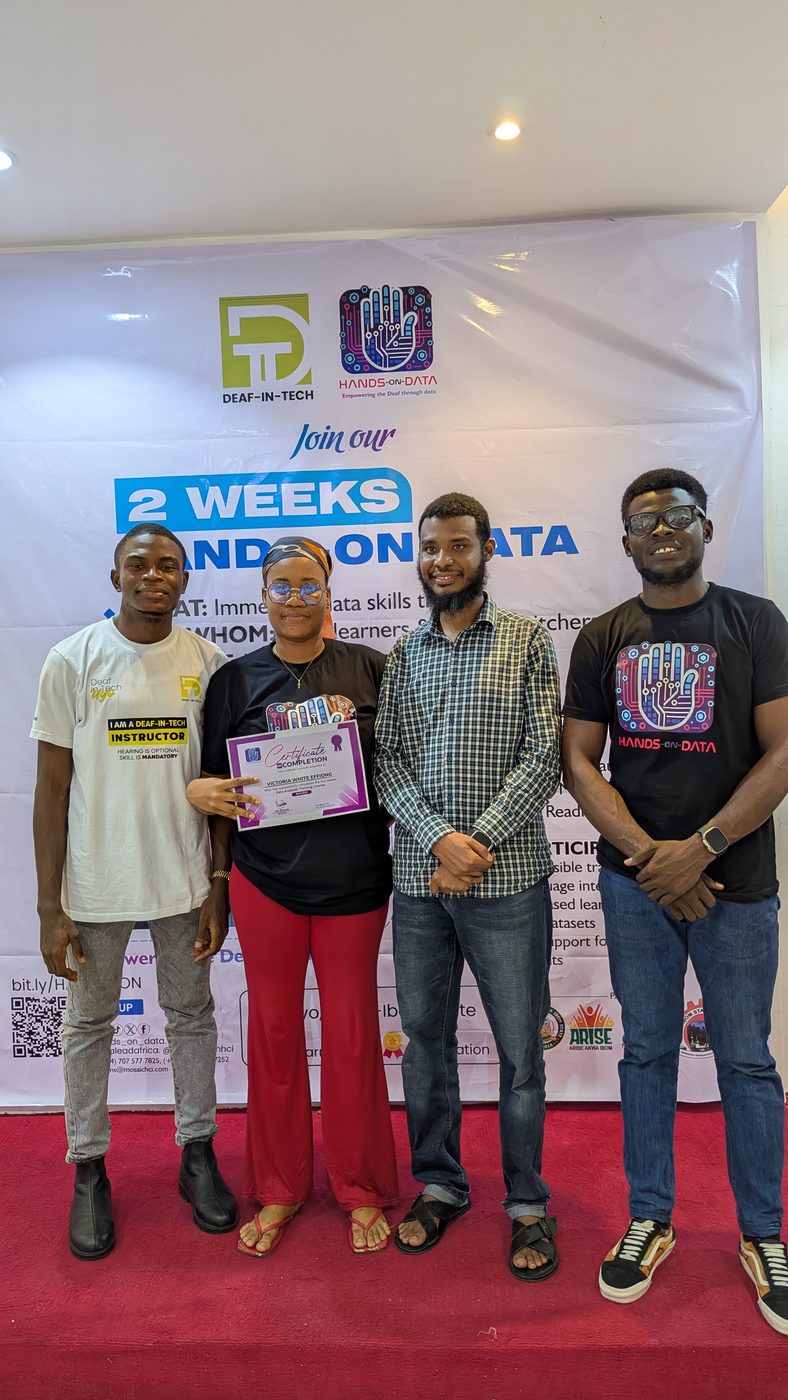
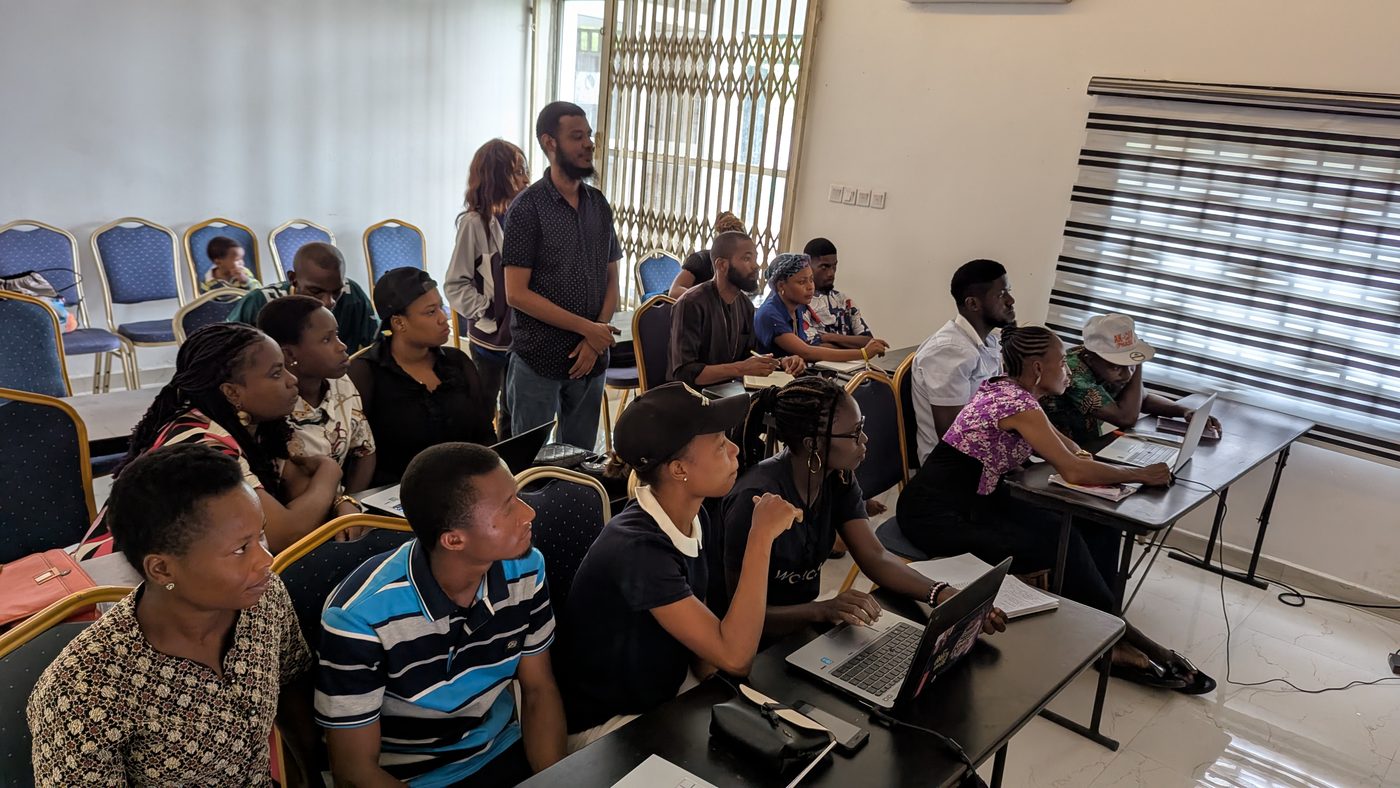
The Facilitator Model
Led by the community we serve.
Every Hands-On Data cohort is led by deaf facilitators — professionals who understand both the technical material and the lived reality of our learners. Instruction happens in Nigerian Sign Language, from the first concept to the final project.
Cohorts are intentionally small and hands-on, built around real-world projects rather than lectures. Continuous mentorship and an active alumni network mean learning doesn't stop at graduation.
This isn't accommodation — it's representation. Deaf facilitators set the pace, shape the delivery, and prove every day what inclusive digital talent looks like.
Plugged into MHCI
Training is just the beginning.
Hands-On Data is embedded in the wider MHCI ecosystem, so every graduate has a direct path from classroom to career.
MOSAIC Labs
Graduates transition directly into MOSAIC Labs, where they take on paid client work in data entry, research support, analytics, and quality assurance.
TalentWorks
Complementary skill matching and remote placement — connecting Hands-On Data graduates with international employers hiring through the TalentWorks pipeline.
Housing4Talent
For learners relocating to work hubs, H4T provides the work-ready co-living infrastructure that keeps the first job and the first data role within reach.
Ibom Investment Collective
Funds programme scaling — new cohorts, new cities, new modules — while keeping the deaf-led model at the centre.
Apply, partner, or support the next cohort.
Hands-On Data is actively recruiting deaf learners and underrepresented participants — and we're looking for corporate, NGO, and technology partners to help us scale the model across Nigeria and beyond.